

[Nghe Tiếng Nhật Đơn Giản] – Ẩm Thực Nhật Bản
Today, let’s talk about “Japanese food culture.” Japanese food is famous all around the world.
There are many dishes that are delicious and visually beautiful. When foreigners come to Japan, the first thing they might want to eat is sushi. Japanese people eat rice frequently. A balanced intake of fish, meat, and vegetables is also a characteristic of Japanese food culture. Moreover, Japanese food doesn’t use much oil.
Therefore, it is often said to be healthy. Soy sauce and miso are essential seasonings in Japanese cuisine. Soy sauce is used for seasoning dishes like sashimi, tofu, simmered dishes, and stir-fried dishes. Miso is used in miso soup, and also for marinating meat and fish. Sushi, ramen, and tempura are especially popular dishes.
They are very popular among foreigners as well. When you come to Japan, please try various kinds of sushi, ramen, and tempura. Japanese people use chopsticks to eat.
Before meals, they say “Itadakimasu,” and after meals, they say “Gochisousama deshita.” These phrases express gratitude to the person who prepared the meal and to the ingredients themselves.
Japanese food culture is truly fascinating. Japanese people love eating raw fish.
From long ago, eating raw fish has been an important part of Japanese culture. Japan is an island nation surrounded by the sea.
Because of this, we have an abundance of fresh and delicious fish. Japanese people value the gifts from the sea and have developed various ways to cook fish. “Sashimi” is the representative of the culture of eating raw fish.
Fresh fish is thinly sliced and beautifully arranged on a plate. Sashimi is eaten with wasabi, soy sauce, and ginger. Wasabi has a sharp spiciness that eliminates the fishy smell, and ginger warms the body. Besides sashimi, Japanese people eat raw fish in various ways.
“Sushi” is one such way. Sushi is a dish where raw fish is placed on top of vinegared rice.
The fish used in sushi varies, including tuna, salmon, and mackerel. Japanese people believe that eating raw fish is good for your health. Raw fish is believed to be rich in nutrients that boost the body’s resistance and help prevent illnesses. However, when eating raw fish, it is important to choose fresh fish and pay attention to hygiene. Next, let’s talk about “popular foods in Japan.”
There are many delicious foods in Japan. In addition to sushi and sashimi, there are many other dishes that you should try. “Ramen” is a very popular noodle dish. When people think of ramen shops, they may imagine small shops with only counter seats, but recently, more ramen shops have tables and are easier for families to visit. Ramen noodles are made from wheat flour and are eaten in hot soup. The noodles vary depending on the shop—they can be thick, thin, curly, or straight, with many different types. There are also various types of soup.
There’s salty soy sauce-based soup, sweet miso-based soup, and rich pork bone broth. They are all delicious. Ramen is topped with ingredients like char siu (roast pork), bamboo shoots, and green onions.
In some shops, you can also add toppings like eggs, seaweed, or corn. In the cold winter, many people eat ramen to warm themselves up.
Ramen can be eaten year-round, but it’s a dish that people especially crave in winter. “Tempura” is also a dish loved by everyone.
It consists of seafood or vegetables coated in batter and deep-fried. Shrimp and squid tempura, or vegetable tempura like pumpkin and sweet potatoes, are both delicious. Tempura has a crispy texture on the outside and juicy inside.
Freshly fried tempura is particularly the best. Tempura is eaten dipped in a special sauce called “tentsuyu.”
Adding condiments like grated daikon radish or ginger makes it taste even more refreshing. “Karaage” is Japan’s version of fried chicken. It is chicken seasoned with soy sauce, garlic, ginger, and other seasonings, then deep-fried. The sweet and salty seasoning pairs well with rice.
It is also a common side dish in bento (lunch boxes). It is popular at izakayas (Japanese pubs) as well.
It tastes great when eaten with rice or salad. “Curry rice” is also frequently eaten in Japan.
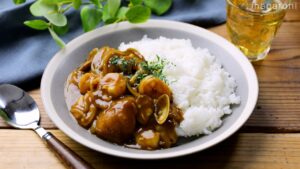
Compared to curry from other countries, Japanese curry is slightly sweeter. It’s made by simmering various vegetables and meats.
Each household has its own way of making curry. Many people eat curry rice in the hot summer.
Curry rice is an easy dish to eat, even when you have no appetite. In addition, there are other delicious dishes like udon, soba, okonomiyaki, and takoyaki. Each of them has a unique taste.
When you come to Japan, be sure to try a variety of dishes. In Japan, there are special dishes eaten on occasions like New Year’s.
During New Year’s, there are many special dishes that carry good luck. Various dishes are eaten with the wish for the coming year to be a good one. “Osechi” is a traditional New Year’s dish.
Various dishes are placed in a beautiful multi-tiered box called a “jubako.” Every dish in osechi is considered to bring good fortune. For example, “kuromame” (black soybeans) are eaten with the wish for good health and hard work, and “kazunoko” (herring roe) is eaten with the wish for many children. “Ozoni” is a soup that contains mochi (rice cake). It is eaten on New Year’s morning.
Depending on the region, the shape of the mochi and the flavor of the soup in ozoni differ. The mochi in ozoni is eaten with the wish for a safe and prosperous year. “Mochi” is a food made from glutinous rice. Mochi can be eaten in various ways, such as in ozoni, grilled, or wrapped in sweet red bean paste. During New Year’s, “kagami mochi” is often eaten.
Kagami mochi is made by stacking two round rice cakes and offering them to the gods. “Ehomaki” is a long sushi roll.
It is eaten on a day called “Setsubun.” Setsubun is a day that marks the division between winter and spring, and it’s a day to drive away evil spirits and invite good fortune. It is said that if you eat the entire ehomaki (lucky direction sushi roll) in silence while facing the year’s lucky direction (the direction that brings good fortune) and making a wish, good luck will come. “Chirashi-zushi” is a dish where various types of fish and vegetables are placed on top of vinegared rice. It is eaten during “Hinamatsuri,” the Doll Festival, which is a celebration for girls.
Hinamatsuri is an event that prays for the healthy growth of girls. Chirashi-zushi is eaten with the hope for the growth and happiness of girls. The dishes eaten during New Year’s are not only delicious but also visually beautiful.
They truly reflect Japan’s traditional culture. Next, let’s talk about Japanese seasonings.
The Japanese use a variety of seasonings to create the flavors in their cooking. Seasonings not only make food delicious but many of them are also good for your health. “Soy sauce” is a very commonly used seasoning.
It’s made from soybeans, wheat, and salt. Soy sauce has a salty taste.
It’s used on sashimi, tofu, as well as for seasoning simmered or stir-fried dishes. There are various types of soy sauce.
Thick soy sauce, light soy sauce, sweet soy sauce, and so on, are used differently depending on the dish. “Miso” is also an essential seasoning in Japanese cuisine.
It’s made by fermenting soybeans with salt and koji (mold culture). Koji is a type of mold.
Miso has a salty, sweet, and fragrant taste. It’s used in miso soup, for marinating meat or fish, and other dishes.
There are also different types of miso. Red miso, white miso, and blended miso vary depending on the region or household. “Mirin” is a sweet rice wine.
It’s made from glutinous rice. Mirin has a gentle sweetness that’s not overly sugary.
It’s used in cooking and sauces. Using mirin adds shine to the dish and makes it more delicious.
It’s often used in dishes like teriyaki chicken and simmered foods. “Wasabi” is a spicy seasoning.
It’s made from the root of the wasabi plant. Wasabi has a sharp spiciness that hits the nose.
It’s eaten with sushi or sashimi. Wasabi not only removes the fishy smell but is also said to have an appetite-enhancing effect. “Ginger” is also a commonly used seasoning.
Ginger warms the body. It’s used for marinating meat, added to soups, or used in sauces.
Ginger helps warm the body and improves digestion. It’s said that drinking ginger tea is good when you catch a cold. Besides these, the Japanese also use various seasonings such as vinegar, sugar, salt, and pepper. Each seasoning has its own role. By combining different seasonings, Japanese cuisine becomes more flavorful and rich. Next, let’s talk about Japanese dining etiquette.
The Japanese place great importance on politeness during meals. Knowing proper dining manners allows for a more enjoyable meal experience. Before a meal, the Japanese put their hands together and say “Itadakimasu.”
“Itadakimasu” means “I humbly receive this meal.” This phrase expresses gratitude towards the person who prepared the meal, the ingredients, and the fact that they can enjoy the meal. When the meal is finished, they say “Gochisousama deshita.” “Gochisousama deshita” means “Thank you for the meal.” The Japanese use chopsticks to eat.
There are several manners associated with the use of chopsticks. You should not stick your chopsticks into your rice.
This is considered bad luck because it reminds people of funerals. Also, passing food from one set of chopsticks to another is not acceptable, as this also reminds people of funeral customs. When not using your chopsticks, place them on a chopstick rest.
If there is no chopstick rest, you can fold the chopstick wrapper to make one. You should not use your chopsticks to serve food to others.
Handing food directly with chopsticks is considered impolite. Use serving chopsticks instead.
Talking while eating is not encouraged. This is because talking with food in your mouth is considered impolite.
Make sure to eat all the rice in your bowl without leaving any behind. It’s not considered good manners to leave rice.
You should hold the rice bowl in your hand and bring it close to your mouth when eating. When drinking soup, hold the bowl in your hand and drink it directly.
It is best to avoid making noise when drinking soup. In Japan, making noise while eating is considered bad manners. However, when eating noodles, it’s okay to make a little noise.
It shows that you are enjoying the meal. The Japanese value the presentation of food.
Dishes are beautifully arranged on small, cute plates. Each person has their own dish.
For large shared dishes, use serving chopsticks to transfer food to your own plate. If you are invited to a meal in Japan, remember these manners. Next, let’s talk about how food is arranged in Japan.
The Japanese place great importance on food presentation. Presentation is like an art form.
Food must not only taste good but also look beautiful. Enjoying food with the eyes is also an important part of the meal. The Japanese often use small, cute plates.
Each dish is arranged separately on different plates. There are various colors and shapes of plates: round plates, square plates, white plates, blue plates, and so on. The impression of the dish changes depending on what kind of plate it’s arranged on. The color of the food is also important.
Use various colors in the dishes. When food is arranged in vibrant colors like red, yellow, and green, it stimulates the appetite.
And, we also think about color combinations. For example, placing green lettuce next to red tomatoes makes both colors stand out. It’s also important to use plates that match the season.
For example, in summer, cool blue plates are often used. The arrangement of the dishes is also important.
Arrange the dishes neatly. Do not stack the plates.
Leave a little space on the plates. This way, the food looks even more beautiful. The Japanese use vegetables, flowers, and leaves to decorate their food.
They cut vegetables nicely and use them for decoration. Flowers and leaves act as accents to the dish.
For example, adding a maple leaf next to tempura creates an autumn atmosphere, which is lovely. The Japanese believe that food that looks beautiful becomes even more delicious. Beautiful presentation reflects the Japanese attention to detail and their spirit of hospitality. Japan has many unique food cultures.
The “tea ceremony” is one of Japan’s representative cultures. In Japan, people don’t drink tea just to quench their thirst.
Drinking tea is a way to calm the mind and enjoy life. In the tea ceremony, powdered green tea called matcha is used.
Special tools are used to whisk (froth) the matcha. A bamboo tool called a chasen is used to whisk the matcha.
In the tea ceremony, tea is prepared carefully and savored. Each movement in the ceremony has meaning. In a quiet tea room, you can spend a peaceful time while enjoying delicious tea. An “izakaya” is a Japanese-style pub or bar.
Japanese people often go to izakayas after work. At an izakaya, they drink beer and talk with friends.
Izakayas offer a wide variety of delicious dishes. They serve various dishes like yakitori (grilled chicken), edamame, and sashimi. Izakaya dishes are often small and easy to eat, making them perfect for enjoying with drinks. Japan also has a bento culture.
A bento is a packed lunch in a box. A bento includes various items like rice, meat, fish, and vegetables. They are made colorful and beautifully arranged.
Japanese people take bentos with them to work, school, or picnics. A homemade bento is filled with love and brings a warm feeling. “Omiyage” refers to gifts bought during a trip.
When traveling, Japanese people buy omiyage to bring back to friends and family. Omiyage often includes sweets, tea, or sake.
Special local products are particularly appreciated. By giving omiyage, you can share memories of the trip.
These food cultures reflect the delicate heart and unique sensibility of the Japanese people. Finally, let’s talk about the role of food in Japanese life.
In Japan, food is something very important. It’s not just about satisfying hunger.
It is deeply connected to Japanese culture and spirit. Japanese people value eating together as a family. Gathering around the dining table and talking while eating is an important time to strengthen family bonds. Conversations like “What happened at school today?” or “What should we have in tomorrow’s bento?” create a warm family atmosphere. Going out to eat with friends is also something we love.
Inviting each other out for meals makes for a fun time. Meals provide a great opportunity to nurture connections between people. By sharing delicious food and enjoyable moments together, friendships grow deeper. Japanese cuisine is also beautifully presented.
There is a belief that delicious food must also look beautiful. Japanese people enjoy food with their eyes and taste it with their mouths.
The choice of dishes and the way the food is arranged are carefully thought out. Japanese dining tables change with the seasons.
In spring, dishes are made using fresh vegetables like bamboo shoots and nanohana (rapeseed flowers). In summer, cooling dishes like somen (cold noodles) and hiyayakko (cold tofu).
In autumn, delicious seafood dishes featuring fish like pacific saury and salmon. In winter, warm dishes like hot pots, oden, and stews are served. By savoring seasonal ingredients, you can feel the changing seasons. Special events in Japan always come with special dishes.
For New Year’s, there is osechi ryori. For Hinamatsuri (Doll Festival), there is chirashizushi.
Each event has its own special food. New Year’s dishes are made with the hope of good fortune, carrying symbolic meanings for luck.
Gathering with family and relatives around these special dishes deepens their bonds even more. In this way, food is an indispensable part of Japanese life. Through food, you can deepen your connections with family and friends, feel the seasons, and experience Japanese culture. Through food, life becomes richer and more meaningful. Japanese food is truly diverse.
Each dish is packed with unique flavors and Japanese culture. From intricate sushi and sashimi to simple onigiri (rice balls) and ramen, all of them are an important part of Japan’s food culture. I would be happy if this video helped you learn a little more about Japanese food culture. If you ever have the chance to come to Japan, please try various dishes.
And experience Japan’s culture more deeply. Thank you for watching the video.
If you hit the like button and subscribe to the channel, I’ll continue making more videos. Also, please leave your thoughts on Japanese food in the comment section.
🟠 Video này hữu ích cho việc luyện nghe và luyện nói theo phương pháp “shadowing”.
Nội dung xoay quanh việc giới thiệu các nét đẹp trong văn hóa ẩm thực của Nhật Bản
⚙️ Nhấn vào biểu tượng phụ đề để xem phụ đề bằng ngôn ngữ của bạn.
Trong video có Script kèm theo cách đọc furigana để người xem vừa nghe vừa kiểm tra lại từ vựng.
Hãy lặp lại nhiều lần để nắm vững tiếng Nhật!
1件のコメント
Lâu ra video quá ạ 😂