



【ガチンコ対決】どっちが旨い!?山形の郷土料理『庄内風芋煮』と当店人気の『アレンジ芋煮』の作り方/料理動画とレシピ
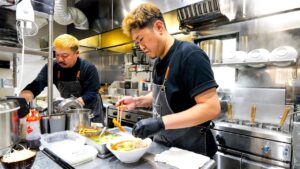
This is Shonai’s Imoni. And this is our original Imoni. It’s delicious. Hello, everyone. I’m Pierre, head chef of a certain restaurant. Here’s the dish I’ll be making today. Can you guess? Well, when you add taro and a hot pot, you all know what it is. Yes, today I’m going to be making Imoni Soup, a fall delicacy. Now, Imoni is famous all over the country. The Imoni parties are made in that big pot using a bulldozer . You can’t talk about autumn without knowing this. It’s super easy, so I hope you’ll watch until the end. It’s said that there are about four types of Imoni Soup. It’s a bit difficult to introduce them all, so today I ‘ll be making two: Shonai’s Imoni Soup and our original Imoni Soup. Okay. Now, let’s move on to the cooking. Now, let’s get to the main part. [Music] Okay, so first, I’d like to introduce the ingredients . As I showed you earlier, first of all, we have taro, which is the main dish since this is potato soup. Yes. And the vegetables are, erm, carrots. Yes. Sorry about the burdock . That’s all I’ve been into today. And, erm, shimeji mushrooms. You can use maitake mushrooms instead. Yes. And deep-fried tofu. Not tofu, but deep-fried tofu. This is one of the characteristics of Shonai’s, erm, imoni soup. And kako. Well, it’s kako. You tear it up with your hands or a spoon and use it. Aside from kakukon, they also sell something called chigiri konnyaku around here . Konnyaku that’s already torn. You can use that too. However , it’s a bit salty, so I’ll use kakukon. Yes. And then green onions. And finally, mitsuba. It has a rich aroma, so adding mitsuba makes it a little more refined. Well, if you don’t have it, you don’t have to add it. That’s about it for now, the main ingredients . Yes. So, first, taro. You can also use these peeled sweet potatoes sold at the supermarket . Since we have time to boil them, I’ll start with that. They’re a little big, so cut them into bite-sized pieces. The smaller they are cut beforehand, the shorter the cooking time. As a restaurant, we get taro with the soil still attached from our contracted farmers, peel them, and cut them into a neat shape using a hexagonal saw. But when you’re cooking at home, or at a barbecue or potato cafe, I think it’s fine to use the peeled sweet potatoes sold at the supermarket . So, put them in the pot. Put the pot in the water and boil the taro. It should take about 20 minutes after boiling. After that, you can check the firmness as you go. So, if you want to boil it until it’s pure white , you can add some dipping sauce or something, and you can boil it, but this time, since it’s potato soup , I want to make it roughly. Okay, let’s boil it. Yes. Now, let’s wait for the frame to finish. It’s been about 20 minutes now. Let’s check the firmness of the taro after 20 minutes. Oh, okay. Okay. It’s fine. Yes. Okay. Okay, now, let’s take this off the heat. For taro, you use this kind of ponzara. Okay. Okay. [Music] Okay. Let’s leave it like this for a bit. I forgot to introduce the kanji characters. You can’t make potatoes without them. Oh, meat. This is its most distinctive feature. I forgot to tell you about it. It’s a potato from the Shonai region, and its distinctive feature is that it uses pork. It uses pork and deep-fried tofu, and is seasoned with miso. And our original Imo Ni Soup. This one also uses this pork. And it’s made with the same ingredients, but with a soy sauce flavor instead of miso . This is our original dish. Well, you won’t understand if I just talk about it, so I’ll keep making it. Today, I thought I’d use this, since it gives off this special pot vibe, right? I think I’ll make about four servings with this. Is that enough? I usually make it like this, so today I thought I’d measure out the ingredients properly. With this pot, I thought I’d make about four servings, so I added 6 portions. 6 portions of water. Let’s make it based on this. Now, let’s start with the pork. Okay, so first, slice the pork belly, and then cut it into bite-sized pieces. Shouldn’t this be fine ? See? Okay. So, add this. Okay. Next is the burdock. We’ll cut the burdock into short slices. When making short-sliced burdock, make sure you prepare the water around the edges. Okay. Draw vertical lines and turn it a little while you make it. Burdock changes color quickly, so rinse it in the water. If you add it before it changes color , it will inevitably turn a little pink when exposed to air. Yes. It looks like this . Yes. So, I’m going to wash this a few times with water to remove the color. Yes. Now, cut this in half. I’m explaining this today, so I’m doing it like this , but when you’re barbecuing outside, you can turn the heat on, add the meat, add the ingredients, and then add any thick burdock you like, and simmer them all together. Next up is the ninsan. For the ninsan, I’m going to cut it into small pieces. Is that about right? Yes. I ‘ll make this the skin part. And then I’ll make this a little thicker, like this. So, let’s add this too. Yes. It looks like this. Okay. So, as I said earlier, it’s a No. 6. This is a No. 3 burdock. Yes. Let’s add the 2 burdock. Let’s loosen it a little before putting it on the heat. Once the meat is cooked, it will stick together . Add a splash of sake. Okay, this will bring it to a boil a little. See, it’s boiling quite a bit. Once it’s boiling, it’s weak. Maybe a little more on this one? Remove the impurities. Oh, it’s boiling. The pork will also give off quite a bit of impurities , so remove a little. If you remove too much, it will take away the flavor of the pork, so just a certain amount is fine. Okay, it should be like this. Before seasoning , I’m going to tear up the konni . You can do this with a spoon, but I’ll tear it up with my hands and add it. It’s easier for the flavor to penetrate if you do it this way than with a knife. Let it come together like this. Add the miso. I’ll list the measurements in the description later, but I always use nominal amounts , so it’s hard to tell the actual amounts. Also, this looks very thin. Yeah. Delicious. One shot. It was a hit. Then, I’ll add the sweet potatoes from earlier. Let’s boil some goods. Okay, this time , I’d like to change things up and make our own original sweet potato dish. Well, basically , it’s based on Shonai’s sweet potato soup, so I’ll use pork. I’m going to use pork and fried tofu to make it soy sauce flavored instead of miso. Sorry. The video just stopped , so I’ve just added mirin and light soy sauce. This. Then I’ll add the sweet potato and adjust the flavor. Let it soak in the flavor. [Applause] Okay. Once the water boils, I’ll simmer the fried tofu in water to remove excess oil, so I’m draining it. I’ll cut this up and add it to the pot later. This also tastes better if it’s soaked in salt. By the way, in Yamagata Prefecture, fried tofu is called aburaage. This was a bit of a shock to me, but the atsuage known nationwide is actually aburaage. And, what is called fried tofu is actually called thin fried tofu . This is a bit of a light joke. Yes . Then, let’s put in the thick fried tofu. Here we go. Yes. One spring onion. Yes. Like this, cut it a little hot. Okay, let’s put this in. [Music] Let’s put half of it in. Okay. Like this. Okay. And once the spring onion is cooked, it’s done. What do you think? See, doesn’t it look delicious? This is the future of imojiru. And this is Toten’s original imoni-jiru. Yes, it’s finished. Come on, come on, come on, let’s have a taste. Pierre. Yes, yes, yes, yes. Sorry to have kept you waiting, sorry to have kept you waiting. Yes. Here we go. Sorry to have kept you waiting, um, I’m alone, but in the end, it’s the same as always. I’m going to eat alone. Let’s see, let’s see. Look, the color of the taro is amazing. I’ll serve it now. Okay, what do we do? This is our original version of the taro. It looks delicious. Jajin. And then, to this, we’ll add the mitsuba we mentioned earlier. Adding a little of this instantly makes it more elegant. See, how’s that? Well. Okay. Let’s eat. Well, first, I’ll try the Shonai style. I’ll start with the soup. Mmm. Delicious. Ah, so comforting. It’s simmering, simmering, and the flavor is deep. Then, I’ll have the sugared sweet potato. [Music] Yeah. Delicious. Soft. The flavor is soaked in. Delicious . [Music] The taro melts, and it thickens a little. That’s what’s good about it. Yeah. You know, I think some people might make fun of pork soup , but it tastes completely different from the potato one. It’s called potato, and the locals make it on the riverbank , and it’s definitely better eaten outside. It’s even better on a chilly day. So, next time, I’ll have the original . Yeah. Oh, this is good. It’s good. Yeah. Ah, [music] I really love this original flavor. Yeah. If I imagine it, it’s like kenchinjiru (chicken soup), but the chicken has more oil in it than the chicken, so it has a deeper flavor. Yeah. And the slight amount of mirin added really gives it a good flavor. If it was just soy sauce, it would just be salty. Adding mirin gives it more depth. Both are good. And the good thing about this is that you can add udon or Chinese noodles to finish off the meal, so you can enjoy it twice. Yeah. It’s so delicious, I can’t describe it. Yes. And, everyone, this is beautiful. It was a feast. [Music] So, how was it? Did you get a good sense of the sweet potato’s deliciousness? Wow, it was delicious. I ate so much that I was sweating. So, today I made two dishes: the sweet potato shao-nai style and the original Ten [Music]. It tasted a little off, so next time I’m thinking about making a Yamagata beef version of sweet potato, so please look forward to it. Okay, that’s all for today. As I always say, please like and subscribe. See you next time. It’s the kusa no koto that seemed strong. [Music] [Music] Thinking about it now, I’m not afraid anymore.
今回は山形の秋を代表する郷土料理「芋煮」の庄内風と当店スタイルの芋煮2種類の作り方をお送りします!
芋煮とは?
里芋を主役に牛肉や豚肉、野菜を煮込んだ心温まる一品。
内陸の村山地方では牛肉と醤油仕立てが主流で、濃いめの味わいが特徴。
一方、庄内地方では豚肉に味噌を合わせ、まろやかでコクのある風味を楽しめます。
同じ山形でも地域ごとに味付けや具材が異なり、食べ比べるとその土地ならではの個性が感じられます。
秋の河原で大鍋を囲む「芋煮会」は、家族や仲間と一緒に過ごす山形の風物詩です。
それでは本編をどうぞ!
※次回は牛肉を使った山形内陸風芋煮を作ります!
レシピは後ほど!
───────────────
00:00 オープニング
01:17 料理工程1
02:09 料理工程2
03:49 料理工程3
06:04 料理工程4
08:16 料理工程5
09:38 実食&判定
エンディング
───────────────
【山形芋煮4種類説の情報元】
にじさんじのB級バラエティ(仮)
〜山形芋煮編〜
───────────────
☆人気の動画☆
水深500mに潜む深海魚『目鯛(メダイ) 』捌き方と料理動画
四季を感じる出世魚『ぶり(鰤)』の捌き方と料理動画
日本一のサワラと称される『庄内おばこサワラ(鰆)』の捌き方と刺身
旬真っ只中!寒鱈と呼ばれる『真鱈 (まだら) 』の捌き方と料理動画
───────────────
ぴえーるです。
いつもご視聴ありがとうございます。
チャンネル登録・コメント・高評価していただけると有り難いです。
このチャンネルは、一年を通じて旬の魚の捌き方や刺身の作り方を、解説を交えながらご紹介しています。
また、普段お客様には見せない厨房の仕込み風景、料理人の仕事風景などを公開していく予定です。
【チャンネル登録はこちらから】
https://www.youtube.com/channel/UCfsgzmXpXiFHPKuJ0YAVRkg
───────────────
welcome to this program
nice to meet you. I’m Pierre. I work at a Japanese restaurant.
I am proud of Japanese cuisine, which is loved by people all over the world.
I started this channel because I wanted people all over the world to see the amazing food I always make in my restaurant kitchen.
I hope you enjoy it.
thank you!
───────────────
動画内使用フリー素材 BGM:
Special Thanks to
“ふぁいの音楽置き場” 樣
https://youtube.com/@fai_musics
“トーマス大森音楽工房” 樣
https://youtube.com/@FM_ThomasOomori
“独り音様”
https://az-ho.org/
【連絡先】
chef.pierre4124@gmail.com
Instagram→https://www.instagram.com/chef.pierre4124
Twitter(X)→https://x.com/chef_pierre4124
#料理VLOG #料理動画 #捌き方 #japanesefood #japanesecuisine
1件のコメント
地元民ですが、芋煮に汁なんてつける人はいません。
とても違和感を感じます。