

#84 シンガポール焼きそば
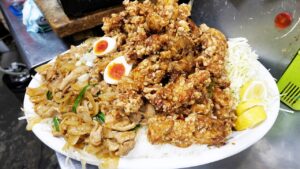
Today, I’ll be making a Singaporean stir-fried noodle, Hayami style Fry up shrimps’ head with vegetable oil in a frying pan And put in and fry up shrimps with their backs opened and cut pork belly Cut purple onion and Chinese chive while frying Take out the fried ingredients and fry up garlic, ginger, Chinese noodle, rice noodle, cut purple onion, cut Chinese chive, and bean sprouts Season it with salt, pepper, sugar, curry powder, oyster sauce, sake, and chicken soup stock Put back the fried ingredients. Sprinkle coriander for finish Place lime on the side and it’s completed.
You can check the details of this recipe in the description Let’s get started. Heat vegetable oil in the frying pan We’ll use it abundantly We have many ingredients today Shrimps, pork belly, Chinese chive, purple onion, bean sprouts We’ll use thin bean sprouts. Garlic, ginger, lime, and coriander Two types of noodle, Chinese noodle and rice noodle Let’s start We’ll begin with the shrimps with head This time we’ll cut the heads They bring out the savory broth Let’s put them in While frying while flavoring the oil from the shells, we’re going to open their back to give it volume And next is the pork belly. Cut them thinly into 3 pieces This flavor is so good Let’s turn them around. The savory broth is coming out from the shells Let’s put in the pork belly and shrimps We’ll move to the next step, purple onion Let’s cut it simply and cut the Chinese chive as well We’ve fried up the shells enough so let’s take them out The shrimps will become hard if we fry them up too long Just fry them up until their color changes It contains both pork’s and shrimps’ umami. It’s going to be very rich The pork looks okay so let’s take it out We don’t throw this oil away but pour it back Since we’re going to fry these noodles, boiled noodle and rice noodle, let’s cut them into bite-sizes And now, put in the grated garlic and ginger They bring out the flavor Once the flavor spreads out, we’ll put in the noodles Loosen the noodle While frying Put in the cut vegetables It looks good. And let’s add salt and pepper next Sugar here Today’s spice is the curry powder Add the curry powder and pour in the oyster sauce Sake and chicken soup stock We’ll just fry it up shortly Then put back the fried ingredients from earlier after blending them Let’s finish it up Chop up the coriander Turn off the fire and put it in. The flavor is nice It’s completed Let’s use the big plate It’s going to be so good Lastly, Peel and sprinkle the lime skin Place the lime on the side Trust me, this is amazing!! It’s ready. Singaporean stir-fried noodle, Hayami style Have a nice day!!
速水もこみちです!M’sTABLEへようこそ!簡単なものから手の込んだものまで様々なジャンルのレシピをご紹介します!他にも、いろんな動画も配信していきますので、ぜひ楽しんでください!
♢チャンネル登録はこちら!
https://www.youtube.com/c/MocomichiHayami
♢Instagram インスタグラム
https://www.instagram.com/mocomichi_hayami/
♢Twitter ツイッター
Tweets by hayami_m_staff
【字幕】設定ボタンの字幕から変更できます。
・日本語
・English
・中文繁體
・中文簡體
【材料/分量】
ビーフン/60g
焼きそば用中華蒸し麺/1玉
豚バラ薄切り肉/80g
有頭エビ/4尾
紫玉ねぎ/1/2個
もやし(細)/80g
ニラ/5〜6本
ライム/1個
パクチー(粗く刻んだもの)/適量
サラダ油/大さじ1
おろししょうが/1片分
おろしにんにく/1片分
A)ーーーーーーーーーーーーー
塩・こしょう/各少々
砂糖/小さじ1
カレー粉/小さじ1/2
オイスターソース/大さじ1
鶏ガラスープ/大さじ1〜2
酒/大さじ1/2
【調理工程】
①有頭エビは塩水で洗ってから背ワタを取り、頭と尾を残して殻をむき、頭は外して、背を開く。
②豚バラ肉、ニラは5cm長さ程度に切り、紫玉ねぎは5mm厚さにスライスし、ビーフンはお湯で戻して食べやすく切る。
③フライパンにサラダ油を熱し、エビの頭を軽く焼いてから、エビ、豚肉を炒め、一旦取り出す。
④③のフライパンににんにく、生姜を加えて炒め、香りが立ったら、麺、ビーフンを炒め、もやし、ニラ、紫玉ねぎを加えて炒め合わせる。
⑤④にA、③で取り出したエビと豚肉、パクチーを加えて全体を絡め、器に盛り付け、ライムの皮のすりおろしを散らし、半分に切ったライムを添える。
【ポイント】
*エビは、だしを取るために頭も一緒に炒めています。
*2種類の麺を使ってぜいたくな焼きそばにします。
♢問合せ先(コラボ・タイアップ・その他のご相談はこちらに!)
mstable.contact@gmail.com
30件のコメント
これはうまいよ。ガポール、また行きたいな。
どんだけサラダ油入れんねんwww
えげつない脂質www
美味料理👍😋😋😋🌹
絶対うまいやつだ…
❤
7:16
もこみち「こいつは間違いなくうまいよ」
男だけどドキッとしたわ笑
もこみちさんが作っている料理食べて見たいです
美味しそうだね、作って見ますわ。お疲れ様でした!
美味しそう🤤香り豊かで、二種類の麺ってのがまた良いですね✨
シンガポール??
うまそう
hi~~my friend come with full support, and wait for U return…😊💕like 711
ナンプラーで味付けしないのですか?
今晩作りました!海老の旨味たっぷりの焼きそば、信じられないくらい美味しかったです。添えたライムを味変で絞れば一気にシンガポール気分が高まりました🇸🇬
あんたを信じないわけないやん。
美味いに決まっとるんよ。
リモンチェッロの作り方知りたいなあ
チャラみちになってるな😃
シンガポール焼きそばの面は2種類使うのがびっくり!!
また更に焼きそばへの理解が深まった気がします^^
ライム入れるところなんかはタイやベトナム感がありますね^^
材料も手軽に入手できそうなので作ってみます!
つくってみます😘💞
これめっちゃ好きやけど作り方知らんかったから嬉しい🤩
動画のクオリティもおもしろさもあるしコンスタントに20万再生くらい回っててもいいのになあ、やっぱパンピーには再現できなすぎるからなのかな
無印良品のBGM
こんなん不味いわけないやん
マジで食いたい、ダイエット中なのによォぉぉぉ!
もこみちさん流の普通の焼きそばも気になる
中華麺は茹でたものを投入?
凄く美味しそうです!食べてみたい。具材とか味とか珍しい味そうでお店ならすぐ頼みたいです(*⁰▿⁰*)
フライドホッケンミーすこ
Please do not be mistaken, if you come to Singapore, please do not try to order this style of Singaporean Style-Fried noodles. This recipe is newly created/modify by Mr Mocomichi Hayami.
最高に美味しかった♪
もこちゃんも最高!
うちに来て一緒に作って
欲しい❣️
レストランより美味しく出来た、本当にうまい💕今は我が家の定番。